Jehovah's Witnesses
La uruguayaThe Jehovah's Witnesses enter the narrative through an unnamed woman traveling to Montevideo after her mother's death. Her exchange with an Evangelical pastor begins in shared sympathy and becomes a tense discussion of religious belief; the pastor's stories about healing and forgiveness then unexpectedly prompt the narrator to examine his own unresolved relationship with Catalina. The episode presents the group through one member's testimony, not through an account of its organization or formal practices.
The Witness on the bus
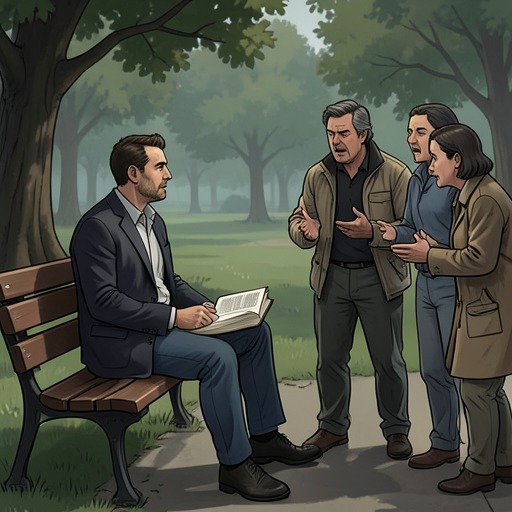
The woman says that her mother died after a long illness and that she is traveling to Montevideo. The pastor first acknowledges the pain of losing a family member and observes that people grieve in different ways. The woman explains that religious faith offers the hope of seeing loved ones again. When he asks her religion, she identifies herself as one of Jehovah's Witnesses; he says he belongs to an Evangelical church and is a pastor.
The shift in their affiliations changes the atmosphere of the conversation. The narrator describes the sympathy between them as suddenly evaporating and their voices becoming hesitant and tense. The pastor challenges the woman's beliefs about the Holy Spirit and miracles, citing Acts 13. She responds to his arguments, and the narrator judges that she defends her position well. The scene portrays a specific encounter between two passengers of different faiths, rather than establishing a general account of how Jehovah's Witnesses engage with other religions.
Miracles and forgiveness
The pastor supports his claims about miracles with stories from his church. He says that people have recovered through prayer, including his grandson's recovery from flat feet, and recounts a woman whose legs, one shorter than the other, became even. The narrator is struck by the physical oddity of that claim and imagines the possibility that a supposed healing might leave the woman shorter instead. His comic speculation gives way to the pastor's more consequential story about forgiveness.
At a church wedding, the pastor says, an older woman arrived with stiff legs and asked to speak with him privately. As they prayed, she broke down over her inability to forgive her son. After she forgave him, the pastor says, she was able to move her legs and walk at the wedding. He later contacted the family and learned that she had since died. He goes on to describe other cases in which forgiveness seemed to precede a change in circumstances, including children finding work and a son-in-law winning a new car in a drawing. These are the pastor's testimonies and interpretations; the episode does not confirm their supernatural explanation.
The pastor also makes the account personal. He says that he had been consumed by jealousy while his wife worked irregular hours and returned home late, and that he prayed when his suspicions overwhelmed him. Although he remained unsure whether she had been unfaithful, he eventually forgave her. He contrasts his former treatment of her with his later habit of preparing dinner and buying the white chocolate she liked; they had been together for thirty-five years. His story turns forgiveness from an abstract religious claim into a change in how he treated his wife.
Narrative significance
The narrator has been listening with fascination, expecting the exchange to remain a dispute about doctrine. Instead, the pastor's account of forgiveness makes him wonder whether he needs to forgive Catalina, and whether doing so might release him from the emotional impasse in which he feels caught. He also considers whether he must forgive himself, while questioning what, if anything, he has done to require it. The passengers do not address him, yet their conversation redirects his attention toward his own marriage.
The episode's significance lies in this unplanned passage from ordinary testimony to private reflection. The woman's membership in the Jehovah's Witnesses brings religious difference into the scene, but the narrator's strongest response is to the practical and emotional question of forgiveness raised by the pastor. The narrative neither settles the religious disagreement nor verifies the pastor's accounts of healing; it shows how a stranger's grief, belief, and stories can acquire personal force for a listener who had not expected to be implicated.